

Why Data-Centric Security is the Future of Modern Cyber Protection
Why Data-Centric Security is the Future of Modern Cyber Protection
In today’s digital world, data has become one of the most valuable assets for individuals and organizations alike. From customer information and financial records to confidential business documents, almost everything now exists in digital form. As cyber threats continue to evolve, protecting this data has become more important than ever. This is where data-centric security comes into the picture.
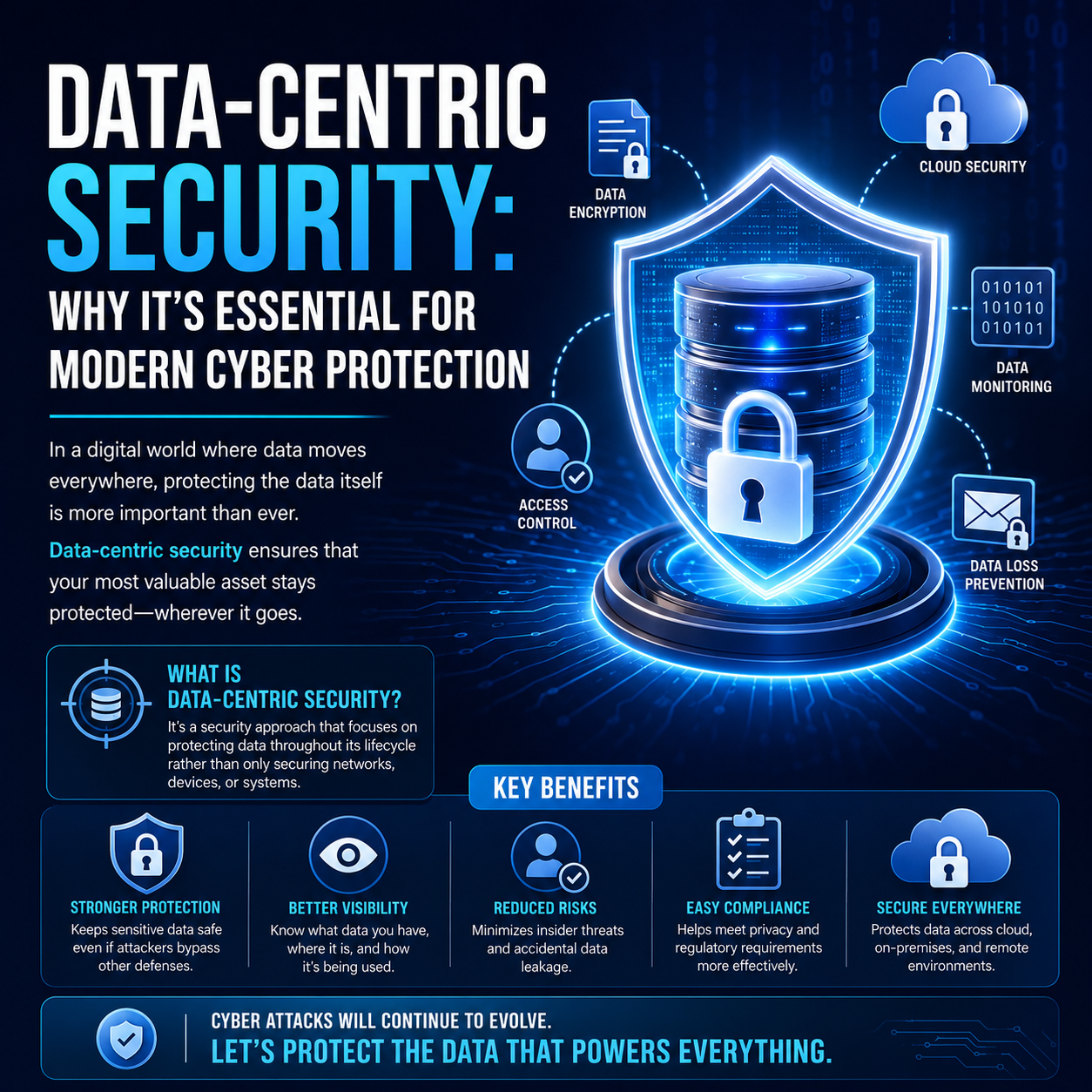
Data-centric security is a cybersecurity approach that focuses on protecting the data itself rather than only protecting the systems, devices, or networks where the data is stored. In simple terms, the goal is to ensure that information remains secure no matter where it travels, whether it is stored in the cloud, shared between employees, or accessed remotely.
For many years, organizations mainly relied on traditional security models that focused on building strong perimeters using firewalls, antivirus software, and network security tools. While these methods are still important, modern work environments have changed significantly. Remote work, cloud services, mobile devices, and third-party platforms mean that sensitive information is constantly moving across different environments. Because of this, protecting only the network is no longer enough.
Data-centric security solves this problem by placing security controls directly around the data. Techniques such as encryption help convert information into unreadable formats for unauthorized users, while access controls ensure only the right people can access sensitive files. Organizations also use data classification to identify important information and apply stronger protection where needed.
One of the biggest reasons data-centric security has become essential is the increasing number of cyberattacks targeting sensitive information. Attackers are no longer only interested in disrupting systems, they want access to valuable data. Whether it is ransomware, insider threats, or accidental leaks, organizations face risks from multiple directions. Protecting the data itself creates an additional layer of defense even if attackers manage to bypass other security controls.
Beyond security benefits, data-centric approaches also help organizations meet privacy and compliance requirements. Businesses today are expected to handle customer information responsibly, and stronger data protection practices help build trust while reducing risks.

In conclusion, cybersecurity is no longer only about protecting infrastructure, it is about protecting what matters most, the data. As technology continues to evolve and digital information spreads across multiple platforms, data-centric security has become a key part of modern cyber protection strategies.